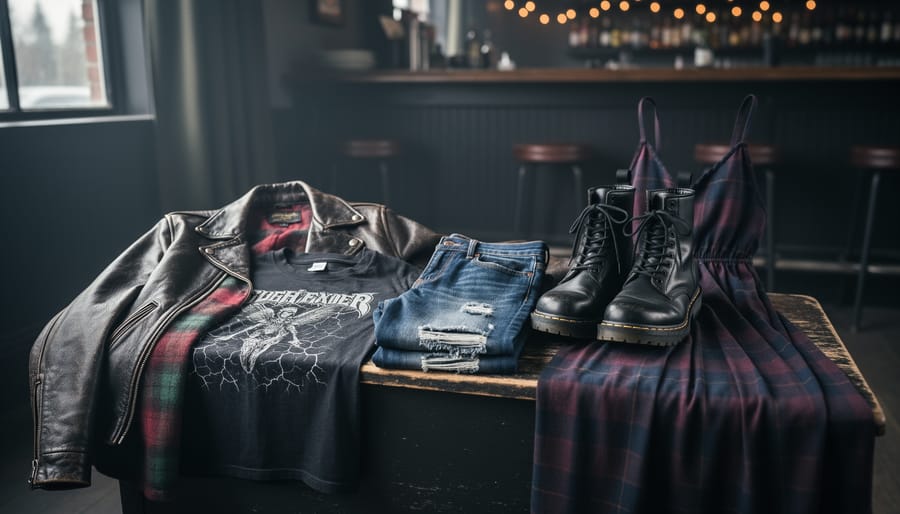
90s grunge fashion is a deliberately anti-establishment style born from the Seattle music scene, characterized by oversized flannel shirts, ripped denim, worn band tees, and chunky boots that rejected the polished excess of 1980s fashion. This wasn’t just clothing. It was a cultural rebellion that celebrated authenticity over perfection, thrift over luxury, and comfort over conformity.
What makes grunge particularly powerful in 2026 is how naturally it aligns with body positivity and self-expression. The movement’s founders, from Courtney Love to Kurt Cobain, wore clothes that fit their lives, not runway standards. They layered, slouched, and mixed textures without concern for traditional silhouettes or “flattering” cuts. That same freedom makes grunge one of the most inclusive vintage aesthetics you can explore today.
This article breaks down the essential elements of 90s grunge style, from its Pacific Northwest origins to the specific pieces that defined the look. You’ll discover how flannel, combat boots, and slip dresses became symbols of a generation, why thrift shopping was central to the aesthetic, and which icons shaped the movement’s visual language. More importantly, you’ll learn how to adapt grunge for your own body and lifestyle, celebrating the attitude of nonconformity that made it revolutionary in the first place.
Whether you’re drawn to the soft grunge femininity of babydoll dresses over thermal shirts or the harder edge of distressed jeans and leather jackets, grunge offers room to experiment without rules. The beauty of this style has always been its refusal to care what anyone else thinks.
Defining 90s Grunge Fashion
Grunge fashion emerged from Seattle’s underground music scene in the late 1980s and early 1990s as a visual manifesto against the decade’s excess. Born in damp basements and dive bars where bands like Nirvana and Pearl Jam played, the aesthetic was never designed by stylists or planned in boardrooms. It was authenticity worn on your sleeve, literally, through ripped flannel and faded band tees that told the story of real lives lived outside glossy magazine spreads.
The movement represented a deliberate rejection of mainstream fashion ideals that demanded polish, perfection, and visible wealth. Where the 1980s celebrated power suits, shoulder pads, and labels, grunge embraced thrift store clothing that had already lived a full life. The aesthetic refused to distinguish between masculine and feminine, expensive and cheap, pristine and worn. Musicians and their fans assembled looks from whatever felt comfortable and available, creating an anti-fashion statement that paradoxically became one of the era’s most influential styles.
- Flannel Layering
- Oversized plaid shirts worn open over band tees or thermal tops, often tied around the waist when not needed. The cornerstone piece that could be mixed, matched, and worn regardless of body shape.
- Combat Boots
- Heavy-soled Doc Martens or military-surplus boots that grounded the aesthetic in practicality and rebellion. These created a signature silhouette that worked with everything from ripped jeans to babydoll dresses.
- Babydoll Dresses
- Vintage slip dresses or loose, empire-waist frocks worn over ripped tights or jeans, popularized by Courtney Love. This feminine-masculine tension became grunge’s most subversive styling trick.
- Androgynous Silhouettes
- Gender-neutral proportions featuring oversized cardigans, baggy jeans, and shapeless layers. The anti-fit approach meant bodies weren’t scrutinized or categorized by conventional standards.
What made grunge revolutionary wasn’t just what people wore, but why they wore it. The aesthetic celebrated thrift-store finds not as budget substitutes but as authentic treasures with history. Holes and frayed hems weren’t flaws to hide, they were proof of a garment’s journey. This philosophy created an inclusive movement where anyone could participate regardless of budget, body type, or access to high fashion. You didn’t need the “right” proportions to wear grunge; the whole point was that there were no right proportions.
How 90s Grunge Fashion Works as Body-Positive Vintage
Grunge fashion works because it actively rejects the idea that clothes should emphasize, minimize, or apologize for your body. The entire aesthetic was built on a deliberate middle finger to the fitted, body-conscious silhouettes that dominated 80s fashion, creating a movement where oversized became the standard and “too big” didn’t exist in the vocabulary.
The magic happens through intentional proportion play rather than careful tailoring. A flannel shirt three sizes too large paired with ripped jeans creates visual interest through volume and texture, not through cinching or contouring. When you layer a slip dress over a band tee with combat boots, you’re building an outfit that moves with you, that gives you physical and psychological breathing room. There’s no pulling, no adjusting, no constant awareness of whether something is clinging in the “right” places.
The layering technique that defined grunge serves a practical function beyond aesthetics. Starting with a base layer like a thermal shirt or fitted tank, then adding an oversized tee, then a flannel or cardigan creates dimensional depth that works on any frame. You’re not hiding or camouflaging; you’re building visual complexity that draws the eye to the overall composition rather than fixating on individual body parts. The beauty is in the contrast between fitted and loose, structured and draped.
This anti-fit philosophy meant grunge was accidentally inclusive long before body positivity became a fashion buzzword. Kurt Cobain’s thrift store finds weren’t carefully selected for his measurements; Courtney Love’s babydoll dresses challenged every rule about “appropriate” proportions for her height and build. They wore what felt right, what had character, what told their story. That same freedom applies today when you pull on Doc Martens with a vintage slip dress, unconcerned about whether your legs look longer or shorter.
The style remains relevant because the core principle hasn’t changed: your clothes should serve you, not the other way around. Grunge taught an entire generation that “flattering” is a trap, that confidence comes from authenticity rather than adherence to arbitrary rules about what bodies should wear. That lesson matters just as much now.
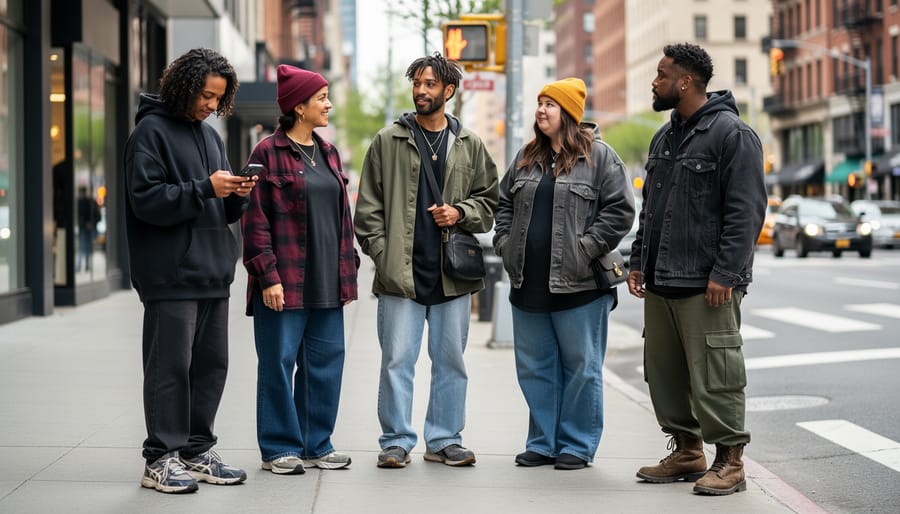
Types and Components of Grunge Fashion
The Layered Foundation
The grunge layered foundation starts with the unexpected pairing of delicate and rugged pieces. A slip dress, ideally thrift-store satin in muted tones, worn over a faded band tee creates instant dimension while offering coverage and comfort. The dress falls loosely over your frame, and the tee underneath adds warmth and casual ease, letting you adjust proportions to suit your body.
Thermal long-sleeve tops work the same magic. Layer them under everything from oversized flannels to vintage sundresses. The ribbed texture adds visual interest, and because thermals come in neutral shades like grey, cream, and black, they blend seamlessly while providing extra coverage exactly where you want it.
Mixing textures matters here. Combine soft cotton with slippery satin, chunky knits with smooth denim. These contrasts create movement and depth rather than clinging to one spot. The beauty of grunge layering is that nothing has to match perfectly, a slightly wrinkled thermal under a lived-in flannel looks intentional, not messy.
Start with pieces that feel comfortable against your skin, then build outward. The base layer sets your foundation, so choose items that let you move freely and breathe easily throughout the day.
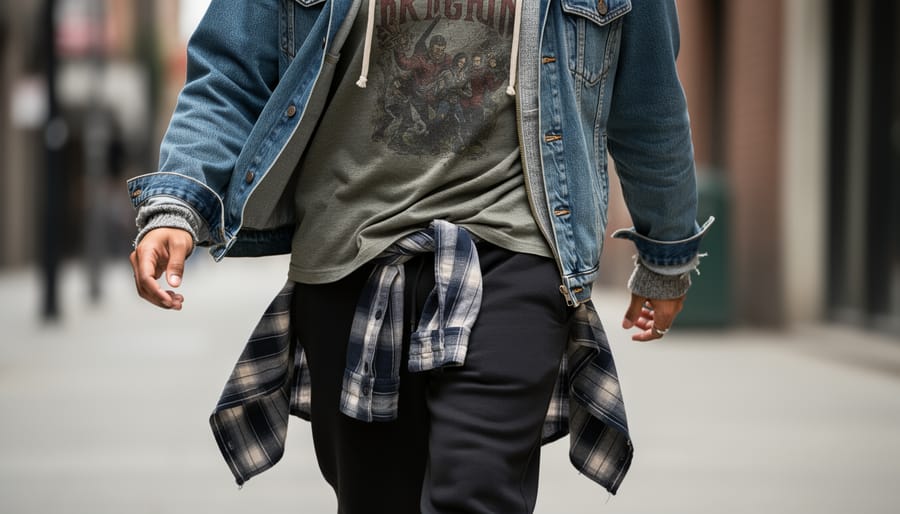
Statement Outerwear and Oversized Pieces
Flannel shirts became the uniform of grunge precisely because they defied traditional fit standards. Worn oversized and unbuttoned over band tees or thermal layers, they created a relaxed silhouette that moved with your body rather than constraining it. The beauty of authentic 90s flannels lies in their structure: the longer back hem provides coverage, while rolling the sleeves adds visual interest at the wrists. Look for thick cotton flannels in buffalo check or muted plaids, sized two to three sizes up from your usual fit.
Oversized cardigans offered similar body-positive appeal through their draping quality. Chunky knit cardigans that hit mid-thigh or longer became layering staples because they skimmed the body without clinging. The key was choosing pieces with enough weight to hang properly, creating vertical lines that elongated the frame.
Leather jackets and denim jackets worn large subverted the typical fitted motorcycle aesthetic. A vintage leather jacket several sizes up, left unzipped, created an intentionally slouchy frame that celebrated comfort over restriction. The attitude mattered more than the measurements, and that’s what made these pieces liberating for every body type.
Footwear and Finishing Touches
Footwear grounded the grunge look in rebellion and practicality. Combat boots and Doc Martens became synonymous with the movement, chunky, worn-in, and unapologetically heavy. These boots work for every body type because they anchor oversized layers with visual weight and attitude. Look for vintage pairs with scuffed leather or patent finishes; breaking them in adds character.
Accessories kept grunge personal rather than prescriptive. Black chokers, often made from simple velvet ribbon or leather cord, added an edge without fussiness. Beanies covered unwashed hair and framed faces with effortless cool. Thrift-store sunglasses, silver rings, and small backpacks completed outfits without demanding perfection. The beauty of grunge accessories lies in their informality, they enhance your look while requiring zero concern about matching or polish, letting your confidence lead instead.
How to Use 90s Grunge Fashion for Body Confidence Today
Everyday Grunge for All Bodies
The beauty of grunge for daily wear lies in its forgiving structure. Start with fitted basics underneath, a simple tank or tee that skims your body comfortably, then add volume on top through an oversized flannel or chunky cardigan. This creates visual interest while ensuring you’re not drowning in fabric.
For bottoms, high-waisted mom jeans or straight-leg trousers in darker washes work universally, sitting at your natural waist to define proportions without constriction. If you prefer skirts, a loose midi worn with combat boots and an oversized band tee achieves that effortless grunge slouch.
The proportion trick that flatters every frame: balance oversized tops with more fitted bottoms, or pair baggy jeans with a cropped layer like a vintage baby tee or tied flannel. You’re creating shape through contrast, not through clothes that cling everywhere.
Keep colors muted, blacks, grays, burgundy, forest green, and don’t match your layers perfectly. That slight visual friction between pieces is exactly what makes grunge feel authentically lived-in rather than costume-like. Throw your hair in a messy bun, skip the mirror-perfect makeup, and you’re done.
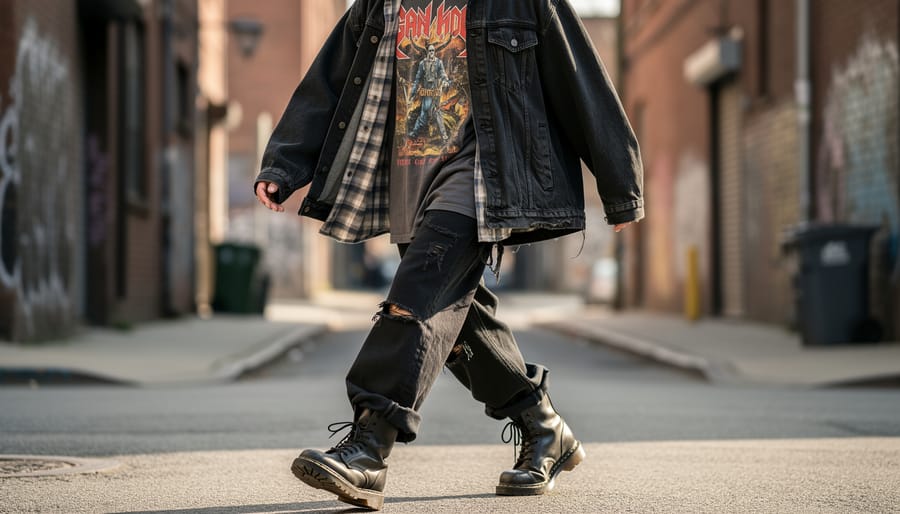
Special Occasions and Self-Expression
Grunge adapts beautifully to occasions beyond casual wear when you play with contrast and intention. For creative work settings, pair a structured blazer with your favorite band tee and torn jeans, the polished outer layer reads professional while your authentic style shows through. Date nights become opportunities to layer a slip dress over a mesh long-sleeve, adding combat boots and a leather jacket for edge with elegance.
Gallery openings and artistic events are grunge’s natural habitat. A velvet babydoll dress worn with chunky boots and layered silver jewelry strikes the perfect balance between dressed-up and defiantly comfortable. The key is choosing one elevated piece, perhaps a vintage silk slip or tailored coat, and grounding it with grunge staples that feel genuinely you.
Social gatherings benefit from strategic accessorizing: swap your everyday beanie for a wide-brim hat, or add a statement choker to transform a basic flannel-and-jeans combination into something more intentional. Remember that grunge was born from musicians expressing themselves onstage, your version can be equally bold. Trust your instincts about what makes you feel powerful, whether that’s dramatic smoky eyes with minimal effort everywhere else or stacking every meaningful ring you own. The occasion matters less than wearing pieces that reflect who you are.
Building Your Grunge Vintage Wardrobe
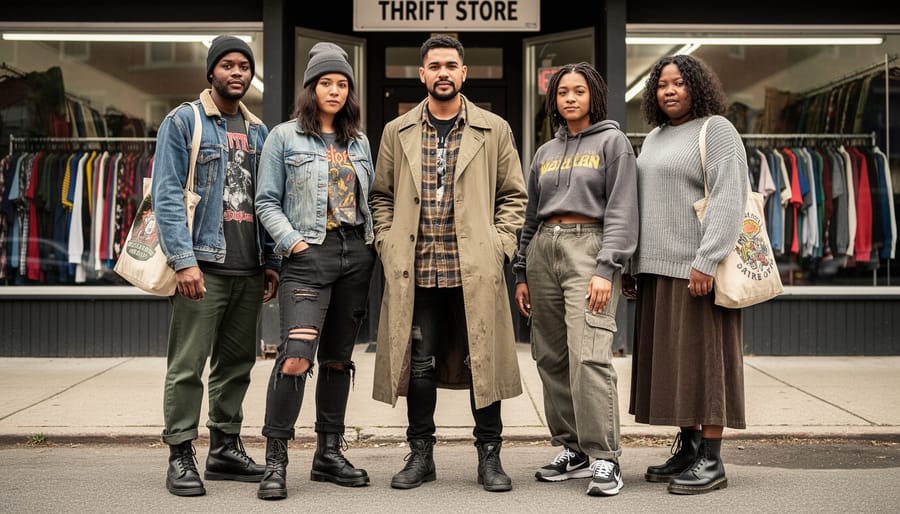
Start with one signature piece that speaks to you, a genuine flannel shirt, a band tee from the era, or a pair of worn-in combat boots. Visit local thrift stores and estate sales where authentic 90s pieces still surface at reasonable prices. Look for natural fabrics like cotton flannel and wool, check for sturdy stitching, and embrace items with character marks that tell a story.
Curate slowly rather than buying everything at once. Grunge works because pieces layer together effortlessly, so focus on building a foundation of oversized basics in neutral tones, black, grey, deep plaid, that mix with what you already own. Try everything on without fixating on the tagged size; grunge pieces were meant to fit loose and layered. Trust how the garment makes you feel over any number on the label.
Grunge Icons Who Championed Authentic Style
Kurt Cobain embodied grunge’s anti-fashion ethos by wearing whatever felt comfortable, regardless of fit or convention. His thrift-store cardigans hung loose on his frame, often with moth holes and missing buttons. He paired ripped jeans with women’s sunglasses and layered thermal shirts under band tees without concern for traditional masculine silhouettes. This disregard for prescribed gender norms and polished appearance made fashion accessible to anyone who felt excluded by mainstream standards.
Courtney Love transformed the babydoll dress into grunge armor. She wore slips and nightgowns as outerwear, layered over torn tights and combat boots, creating a deliberately confrontational feminine aesthetic. Her smeared makeup and blonde roots challenged the polished perfection expected of women in rock, proving you could command attention while rejecting conventional beauty rules. Love’s style celebrated femininity on her own terms, not fashion industry dictates.
Eddie Vedder’s uniform of flannel shirts and cargo shorts demonstrated that personal comfort trumped trend cycles. He wore the same practical pieces regardless of Pearl Jam’s rising fame, never upgrading to designer versions or cultivating a more refined image. This authenticity resonated because it was clearly about self-expression, not image management.
What made these icons genuinely influential wasn’t just their clothing choices but their visible comfort in their own skin. They wore oversized pieces, mismatched patterns, and secondhand finds with the same confidence others reserved for couture. That ease translated through photographs and performances, sending a powerful message: your worth isn’t determined by how well you fit fashion’s narrow templates. Their legacy endures because body confidence rooted in authentic self-expression never goes out of style.
Frequently Asked Questions
Can I wear grunge fashion if I’m petite or plus-size?
Absolutely. The oversized aesthetic works for all bodies, just choose pieces with slightly different proportions. Petite wearers can balance volume with fitted elements like slim jeans, while plus-size bodies can embrace dramatic layering without worrying about traditional “flattering” rules that grunge deliberately rejects.
Where can I find authentic 90s grunge pieces?
Check local thrift stores, Goodwill, and vintage shops where flannel shirts and band tees are often abundant and affordable. Online platforms like Etsy, Depop, and eBay offer curated selections, though you’ll pay more for pre-selected items than thrifting yourself.
Is grunge fashion appropriate for work or formal settings?
You can adapt grunge’s spirit to professional environments by choosing quality fabrics and toning down the distressed elements. A structured blazer over a vintage band tee with dark jeans and boots captures the attitude while reading as polished, or try a slip dress layered over a turtleneck for creative workplaces.
Can I mix grunge with other vintage styles?
Grunge pairs surprisingly well with 70s bohemian pieces, vintage denim from any era, and even some 80s leather elements. The key is keeping the laid-back, anti-precious attitude, avoid mixing grunge with overly polished or costume-y vintage that contradicts its casual ethos.
Beyond these common questions, remember that grunge’s greatest gift is its permission to stop worrying about rules altogether. If you’re hesitating because you think you’re too old, too young, or the wrong body type for a style that literally emerged from rejecting those exact judgments, you’re missing the point. The musicians who created this look weren’t thinking about flattering angles or age-appropriate dressing. They wore what felt real.
Your grunge wardrobe should reflect that same authenticity. Don’t stress about sourcing every piece from 1993 or achieving some Pinterest-perfect interpretation. Raid your local thrift store, grab what speaks to you, and layer it in ways that make you feel powerful rather than performed. That confidence, not the flannel itself, is what makes grunge work.
uses
Grunge fashion serves multiple empowering purposes in your vintage wardrobe. Use it to create comfortable daily outfits that don’t require you to squeeze into restrictive clothing, the oversized aesthetic naturally accommodates fluctuating body shapes and changing confidence levels throughout the month.
The style works brilliantly for creative professional environments where you want to project authenticity without sacrificing comfort. Pair a vintage band tee under a blazer with your favorite worn jeans for meetings that require polish without conformity.
Social gatherings become less stressful when you’re wearing clothes that move with you rather than against you. A slip dress layered over a thermal creates party-ready style that lets you eat, dance, and relax without worrying about visible lines or restrictive fits.
Use grunge pieces to express your mood and identity on days when conventional fashion feels performative. The aesthetic’s rejection of polish gives you permission to show up as yourself, whether that’s edgy, soft, rebellious, or contemplative. This flexibility makes grunge fashion a reliable tool for building genuine confidence through self-expression rather than conformity.
The anti-establishment spirit that birthed 90s grunge fashion wasn’t just about rejecting mainstream trends, it was about rejecting the oppressive idea that bodies need to conform to narrow standards. When you slip on an oversized flannel or layer a slip dress over worn denim, you’re participating in a movement that said “enough” to the fashion industry’s unrealistic expectations.
Grunge gave us permission to prioritize comfort, authenticity, and self-expression over fitting in. That same permission extends to you today. Your vintage grunge wardrobe isn’t a costume; it’s an assertion that your body deserves to feel good in what it wears, that style has nothing to do with size, and that confidence comes from embracing who you are rather than shrinking yourself to meet someone else’s ideal.
The thrift stores and vintage shops where you’ll find authentic grunge pieces are filled with garments that celebrated every body type from the start. Explore them. Experiment. Layer that thermal under a band tee that’s three sizes too big. Stomp around in those combat boots. Let the aesthetic that once liberated a generation liberate you too.