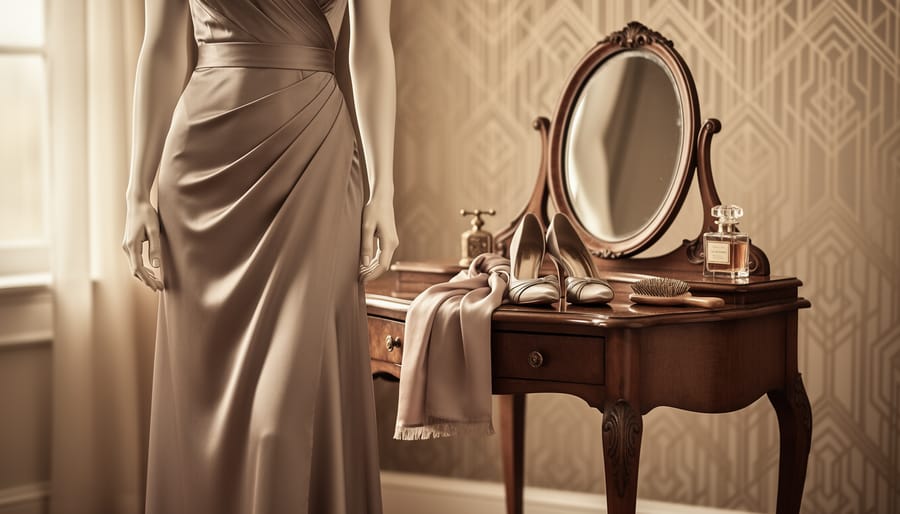
Vintage 1930s fashion is the long, lean, softly draped style that followed the boyish flapper look of the 1920s, defined by the bias cut, fluid fabrics like rayon and silk crepe, natural waistlines, and hemlines that skimmed the calf by day and swept the floor by night. It’s the decade that put the waist back where it belongs and invited curves to take a bow. Bias cutting, which means slicing fabric on the diagonal so it stretches and clings gently, gave gowns a liquid drape that moved with the body instead of hiding it. Rayon, the new “artificial silk,” made that glamour affordable for everyday women, not just movie stars.
Below, you’ll find the signature garments, the icons who wore them best, and easy ways to bring that polished, feminine shape into your own wardrobe today. If you love knowing where a style comes from, our look at the rebellious vintage history behind women’s fashion sets the scene beautifully. Whatever your shape or size, 1930s style was designed to flatter, and it still does.
What 1930s Fashion Means: Soft Curves, Long Lines, and Quiet Glamour
The 1930s traded the flat, boyish flapper shape of the 1920s for something softer and more feminine. Waistlines returned to the natural waist, hemlines dropped to mid-calf for day and to the floor for evening, and shoulders picked up fresh interest through puffed sleeves, capelets, and padded lines. Fabric did a lot of the work, too, falling in long, fluid drapes that followed the body instead of hiding it. That’s the quiet glamour the decade is known for.
Money was tight, so this elegance had to be resourceful. “Make do and mend” was a way of life: women restyled old dresses, swapped collars and trims, and sewed at home from paper patterns. Hollywood supplied the dreaming. A bias-cut satin gown on screen gave everyday people something lovely to aim for, even if their own version was a rayon frock stitched at the kitchen table.
Here’s a quick glossary of terms you’ll meet throughout this guide:
- Bias cut
- Fabric cut on the diagonal so it stretches slightly and skims the body with a liquid, flowing drape.
- Puff sleeve
- A sleeve gathered at the shoulder or upper arm for a soft, rounded shape that adds shoulder interest.
- Cowl back
- A back neckline that falls in soft, draped folds, a signature of 1930s evening gowns.
- Tea dress
- A light, mid-calf day dress, often in a floral print, made for afternoons and everyday elegance.
- Pyjama suit
- A wide-legged top-and-trouser set worn for lounging and beach days, and a stylish nod to menswear.
What makes these shapes so lovable is how generously they treat real bodies. Natural waists, gentle drape, and room to move celebrate curves rather than correct them, so there’s a version of 1930s style for nearly everyone.
How 1930s Fabric Innovations Changed the Way Clothes Moved
The Bias Cut: Vionnet’s Gift to Every Curve
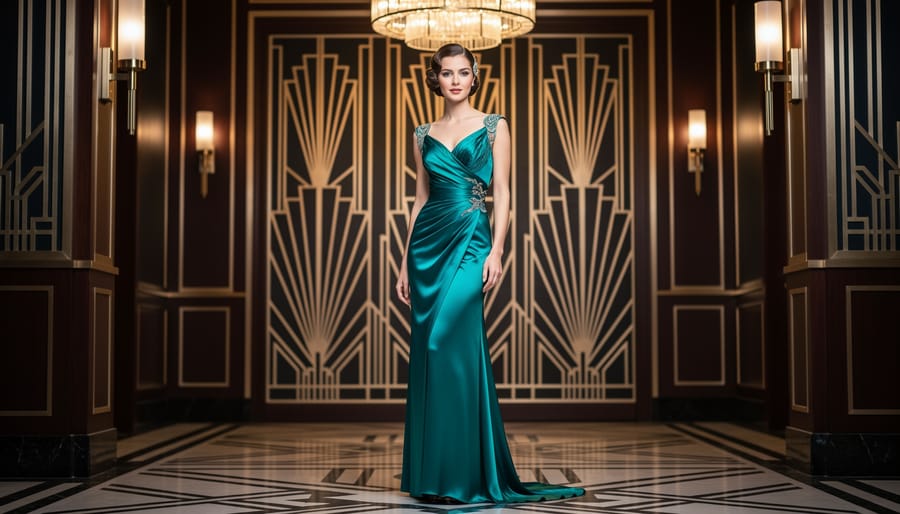
Here’s the secret behind that liquid, second-skin drape: the bias cut. Most fabric is cut along the straight grain, following the threads that run lengthwise and crosswise. Madeleine Vionnet turned the pattern a quarter turn and cut on the diagonal, so the cloth gains a gentle stretch and swings with the wearer. Satin and crepe cut this way skim the hip, ripple at the hem, and settle over curves instead of fighting them.
Vionnet, the Parisian couturière often called the architect of dressmaking, built whole gowns from this idea, sometimes with hardly a seam. Because the fabric moves with you, the shape adapts to real bodies rather than demanding one rigid figure. That is why her bias-cut evening gowns became the signature of 1930s glamour, and why they still feel like a celebration of every curve.
Rayon, Crepe, and the Rise of Affordable Glamour
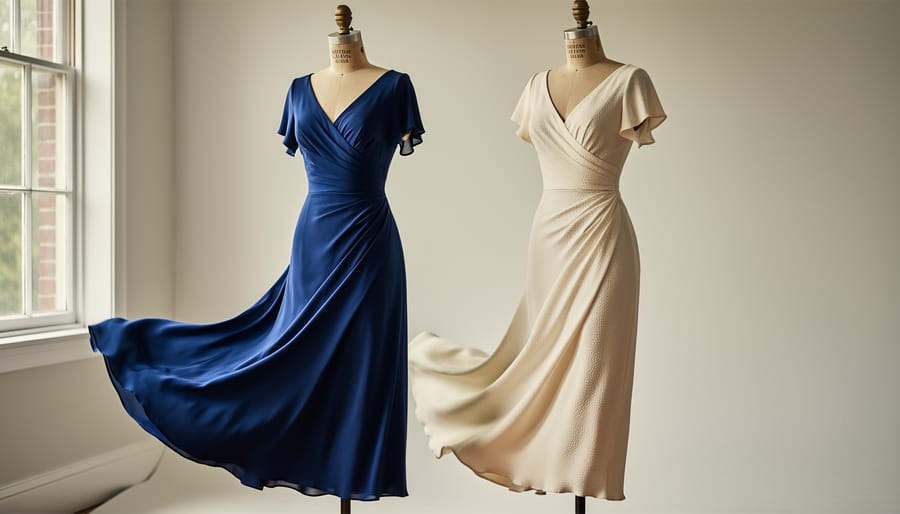
Rayon, often called “artificial silk,” was the quiet hero of 1930s wardrobes. Made from regenerated plant cellulose, it had the lustrous, liquid drape of real silk at a price a working woman could manage. Paired with crepe weaves, whose slightly pebbled, matte surface hangs beautifully and forgives a long day of wear, rayon meant that a flowing, flattering dress was no longer reserved for the wealthy.
That’s the heart of Depression-era glamour: pretty, graceful clothes made accessible. A rayon crepe dress could be cut on the bias or gathered at the waist, then dressed up with a brooch for an evening out.
The decade also hinted at what was coming. Zippers were becoming a handy fixture in women’s side plackets, and the news that nylon launched after a decade of research arrived right at the end of the 1930s, promising a new kind of sleek, strong fiber.
Signature Looks of the Decade: Day Dresses, Evening Gowns, and Pyjama Chic
Day Dresses and Tea Dresses
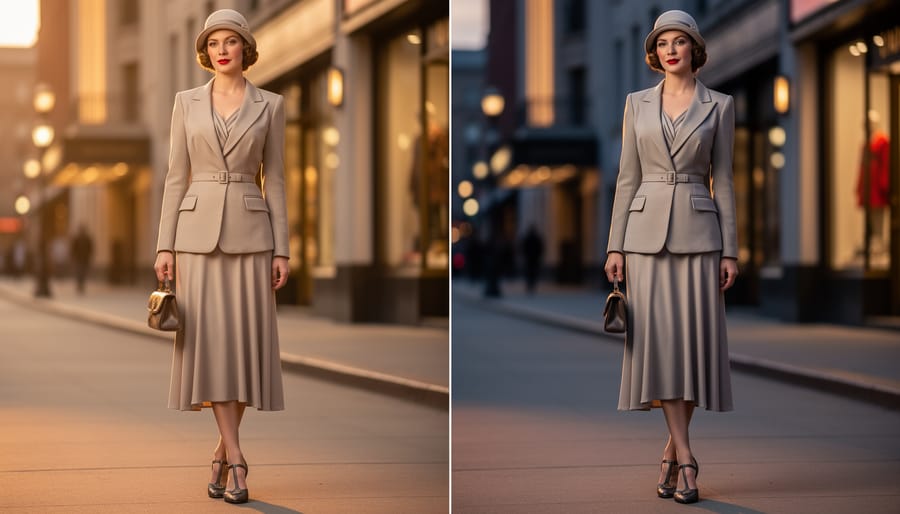
Daytime in the 1930s was all about soft, practical femininity. Day dresses and tea dresses fell to mid-calf, with natural waistlines that nipped in gently and skirts that swung with every step. Prints did the heavy lifting: small florals, polka dots, geometric patterns, and tiny abstract motifs turned up on affordable rayon and crepe. Sleeves added the personality, with puffed shoulders, flutter caps, and soft bell shapes giving even a simple frock some charm. Many styles buttoned up the front or featured a smart collar, bow, or pleated detail at the neckline. Tea dresses leaned a little dressier, perfect for afternoon gatherings. The cut flatters a wide range of shapes, because the waist is defined without squeezing and the skirt skims rather than clings, which makes these frocks a wonderful starting point for any vintage wardrobe.
Evening Gowns and Hollywood Glamour
Evening wear in the 1930s was all about liquid softness. Gowns were cut on the bias in satin or crepe, so the fabric skimmed the hips and fell in a long, fluid line to the floor. Backs were the real showstoppers: cowl necklines draped low between the shoulder blades, and some dresses dipped almost to the waist, with a bit of back drama replacing the frills of earlier years.
Hollywood supplied the dream. Screen sirens like Jean Harlow, poured into white satin, made this slinky shape feel like the height of glamour, and shop girls everywhere copied it in more affordable rayon. The beauty of the cut is that it follows your curves rather than fighting them, so a gown that gently clings and flows can flatter a wide range of bodies. Add a pair of long gloves and a wave of curls, and the old-movie magic is yours.
Trousers, Suits, and Pyjama Style
Trousers were the quiet revolution of the 1930s. Tailored suits gave women strong, squared shoulders and neat, nipped waists, a sharp counterpoint to all that soft bias-cut drape. Beachwear got playful, too, with wide-leg beach pyjamas in bold prints and breezy lounge pyjamas that made relaxing look glamorous.
Then came the stars. Marlene Dietrich stepped out in menswear-inspired trousers and made confidence the whole point, while Katharine Hepburn made roomy, high-waisted wide-leg pants her everyday signature. Their message was simple: you could dress for comfort and still turn heads. For a modern wearer, a high-waisted wide-leg trouser with a fitted blouse is one of the easiest ways to wear the decade, and it flatters a wonderful range of shapes.
Icons Who Defined 1930s Style
The 1930s gave us a cast of people who treated clothing as a way to say exactly who they were. Each one proves the decade’s style was never one-size-fits-all.
Jean Harlow, the “Platinum Blonde,” made liquid satin and bias-cut gowns feel like a second skin. Her glow and her ease in front of the camera remind us that glamour starts with comfort in your own body. If you want to echo her look, our pinup makeup tips are a lovely place to begin, and a swipe of vintage red lipstick finishes the picture.
Marlene Dietrich strolled into tailored suits and top hats and made them utterly her own. Katharine Hepburn followed with her wide-legged trousers, wearing them with a confidence that helped change what women could wear every day. Joan Crawford brought bold, strongly padded shoulders that gave her silhouette real presence, a shape that would only grow more important as the decade went on.
Behind the screen sirens stood the designers. Madeleine Vionnet’s diagonal cutting let fabric follow a woman’s curves rather than fight them. Elsa Schiaparelli added surprise, with playful details and daring colour that made fashion feel like art and wit rolled into one.
What ties them together is individuality. Soft and sleek, sharp and tailored, whimsical or dramatic, every one of them chose a look that felt like theirs. That spirit still guides vintage lovers today, whether you’re channelling Harlow at a party or borrowing a few winter pinup style tips to stay glamorous when the weather turns chilly.
How 1930s Style Is Used Today: Wearing and Styling the Look
Bringing 1930s fashion into your life is easier than you might think, and it doesn’t take a costume budget. Start with one piece you adore, like a flutter-sleeved tea dress, and build outward from there. A small vintage wardrobe grows beautifully when each piece earns its place.
Here are a few practical ways to wear the look:
- Wear a floral tea dress with a cardigan for easy everyday charm.
- Choose a bias-cut gown for weddings, galas, and themed evenings.
- Slip into wide-legged pyjama-style sets for relaxed lounging at home.
- Let accessories lead: gloves, a tilted hat, and T-strap heels do plenty of work.
- Finish with soft finger waves and a rosy lip for a complete period feel.
The natural waistline and fluid drape are wonderfully forgiving. Because the fabric skims rather than squeezes, it flatters a huge range of shapes, and the longer hemlines and gentle shoulder details create balance without hiding anything. Dress the body you have, and let the cut do the celebrating.
Pinup-inspired looks and photoshoots love this decade too. A satin gown with a cowl back photographs like a dream, and pairing it with gloves or a glamorous hat brings that Hollywood-screen magic to life. If you want to take the whole look further, our guide to 1930s hair waves and makeup walks you through finishing touches that pull everything together. For more ways to wear the decade’s silhouettes, see our vintage fashion decade guide, and for a little inspiration from the stars who defined the era, meet the pinup icons who still inspire us.
Delicate pieces deserve gentle care. Hand wash rayon and silk in cool water with a mild detergent, never wring them out, and dry flat or on a padded hanger away from direct sunlight. Store them folded in acid-free tissue so the bias-cut fabric doesn’t stretch out of shape, and steam rather than press when you can.
How Vintage 1930s Fashion Works
The magic of 1930s fashion comes down to three things working together: cut, fabric, and fit. Designers like Madeleine Vionnet sliced cloth on the diagonal, so it gave a little stretch and draped over the body like water rather than standing stiff. Pair that with rayon and crepe, which are soft and heavy enough to hang beautifully, and the garment practically moves with you.
Then came the smart construction details. Side zippers replaced rows of tiny hooks, long seams were shaped to follow the natural waist, and fabric was gathered at the shoulders for a confident line on top and a flowing skirt below. Nothing relied on tight corseting, so the silhouette came from the clothes themselves rather than from squeezing the body into shape.
That is why these pieces feel so forgiving. The cloth does the flattering for you, skimming curves instead of fighting them. When you try a bias-cut dress on, give it a moment to settle; the fit reveals itself as the fabric relaxes against you.
Common Questions About Vintage 1930s Fashion
How do I tell 1930s from 1940s clothing?
Look at the shoulders and hemlines: 1930s pieces tend toward soft, fluid drape, flutter sleeves, and longer, swishier skirts, while 1940s clothes are boxier, with padded shoulders and shorter, more practical hems. Construction clues like metal side zippers and rayon crepe can help too.
Is vintage 1930s clothing wearable for all body types?
Absolutely. The natural waistline and fluid drape of bias-cut and tea dresses skim curves rather than squeeze them, so many people find these shapes wonderfully flattering. Vintage sizing runs smaller than modern sizing, though, so go by your measurements, not the label.
How should I care for vintage rayon?
Treat it gently: hand wash in cool water with mild soap, never wring it out, and lay it flat or hang it to dry away from direct heat. Rayon is weaker when wet, so be patient and handle it with care.
What is the difference between reproduction and true vintage?
True vintage was made during the 1930s, while reproduction pieces are newly made to mimic the look, often with modern sizing and easier care. Both are lovely, and reproductions can be a great way to enjoy the style every day.
What accessories finish a 1930s look?
Think tilted or wide-brimmed hats, soft gloves, T-strap shoes, and a little clutch. Add finger waves in your hair and a berry lip, and you’ve got the whole picture.
Still curious, or have your own vintage find to show off? We’d love to hear about it, so pop your questions and favorite looks into the comments and join the Kitty Girl community.
The beauty of 1930s fashion is that it never asked anyone to shrink. Bias-cut satin that follows your curves, rayon that gave ordinary women a taste of silk, natural waists and fluid drape that flatter so many shapes: this was glamour built from clever, resourceful thinking, and it still feels generous today. Madeleine Vionnet’s diagonal cut and the drapey crepes of the decade proved that elegance could be accessible, and that every body deserves clothes that move beautifully with it.
If this era has stolen your heart, we’d love to help you find your own piece of it. Browse the curated vintage collection at Kitty Girl Vintage, subscribe to our newsletter for styling inspiration and new arrivals, and share your own 1930s-inspired looks with the community. Whether you’re pairing a tea dress with T-strap shoes or stepping out in a silky gown, your style is part of the story now.