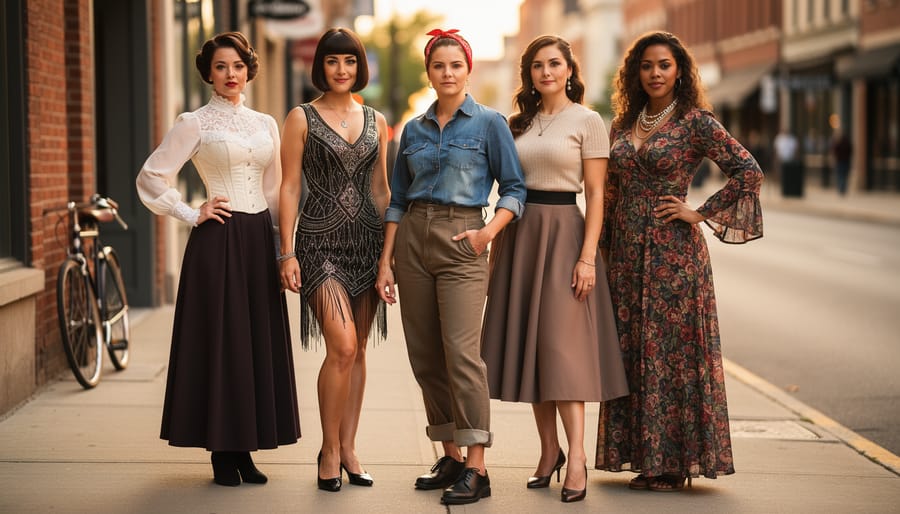
Women’s fashion hasn’t just changed hemlines and silhouettes over the decades—it’s chronicled our collective journey toward freedom, self-expression, and unapologetic authenticity. From the corseted constraints of the Victorian era to the liberating flapper dresses of the 1920s, each transformation in women’s wardrobes reflected seismic shifts in how society viewed feminine identity and power.
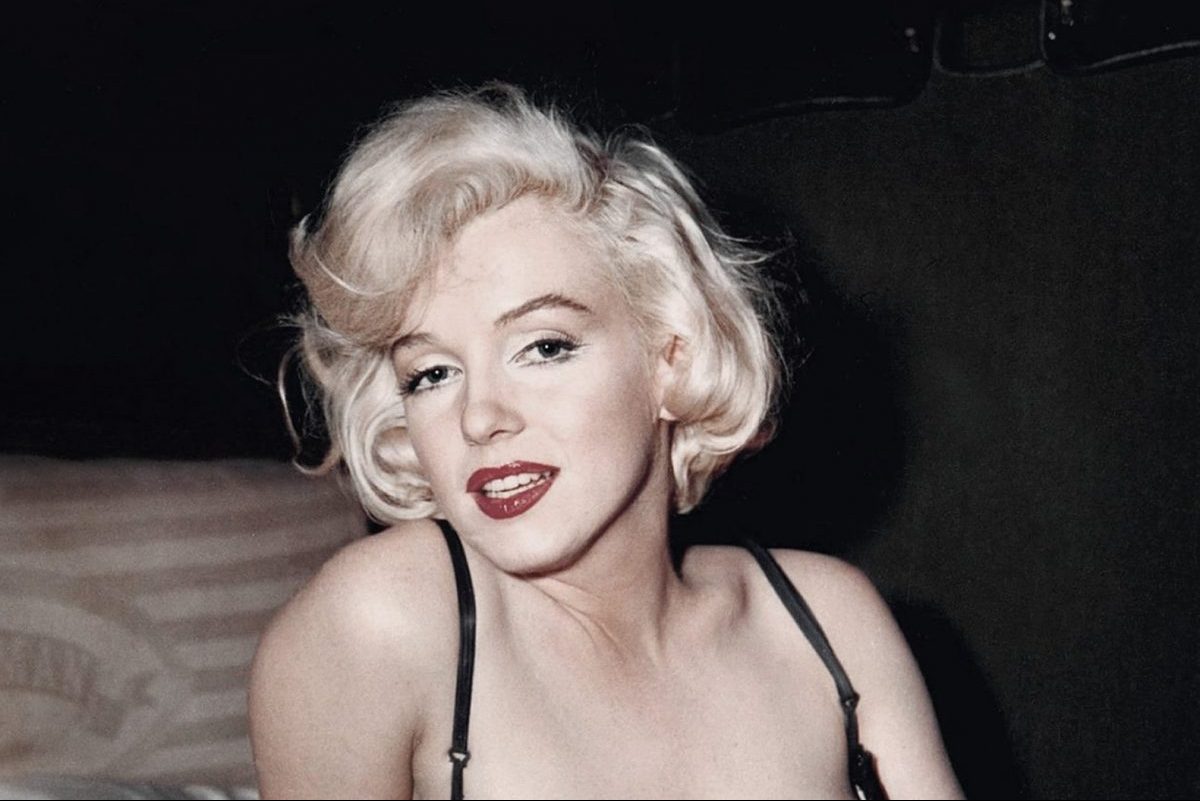
Consider the 1940s, when women stepped into factories wearing practical trousers and discovered that clothing could empower rather than restrict. The hourglass silhouettes of the 1950s celebrated curves with unabashed confidence, while icons like Marilyn Monroe and Bettie Page redefined beauty standards by owning their bodies with revolutionary self-assurance. The 1960s brought miniskirts and mod styles that declared independence, and the 1970s embraced bohemian freedom that rejected conformity altogether.
What makes this evolution truly remarkable is that women didn’t just passively accept fashion—they actively shaped it, pushing boundaries and demanding garments that reflected their evolving roles and aspirations. Every gathered skirt, every bold print, every daring neckline represented someone saying, “I deserve to feel beautiful and comfortable in my own skin.”
Today’s vintage fashion enthusiasts understand something profound: these historical styles aren’t relics to be preserved behind glass. They’re wearable celebrations of the courageous women who came before us, reminders that self-expression through fashion has always been an act of personal revolution. When you slip into that vintage circle skirt or pin those victory rolls, you’re not just wearing clothes—you’re honoring a legacy of women who transformed fashion into liberation.
The Corseted Era: When Fashion Began Its Revolution (1900s-1910s)
The Bloomer Movement and Early Acts of Fashion Defiance
Picture this: it’s 1851, and a woman walks down the street wearing loose-fitting trousers gathered at the ankle beneath a knee-length skirt. Scandalous! Yet Amelia Bloomer and her fellow reformers knew that true freedom couldn’t exist while women were trapped in corsets tight enough to bruise their ribs and skirts heavy enough to weigh them down—literally and figuratively.
These courageous women weren’t just making a fashion statement; they were demanding the right to breathe, move, and participate fully in life. The bloomers (named after Amelia herself) represented something revolutionary: the radical notion that women’s comfort mattered as much as their appearance. Though society mocked them relentlessly, these early fashion rebels planted seeds that would blossom into the diverse, body-positive styles we celebrate today.
What’s truly inspiring is that these women understood something timeless: your clothing should serve you, not constrain you. They faced ridicule, editorials condemning their “unfeminine” attire, and social ostracism, yet they persisted. Their bravery reminds us that every time we choose comfort over convention or celebrate our unique silhouettes in vintage-inspired pieces that make us feel gorgeous, we’re honoring their legacy.
The bloomer movement ultimately proved that fashion evolution isn’t just about hemlines and silhouettes—it’s about women claiming autonomy over their own bodies. These pioneering spirits taught us that true style means dressing authentically for yourself, a message that resonates beautifully with today’s vintage fashion lovers who embrace all bodies and celebrate individual expression.
Flapper Freedom: Dancing Into Self-Expression (1920s)
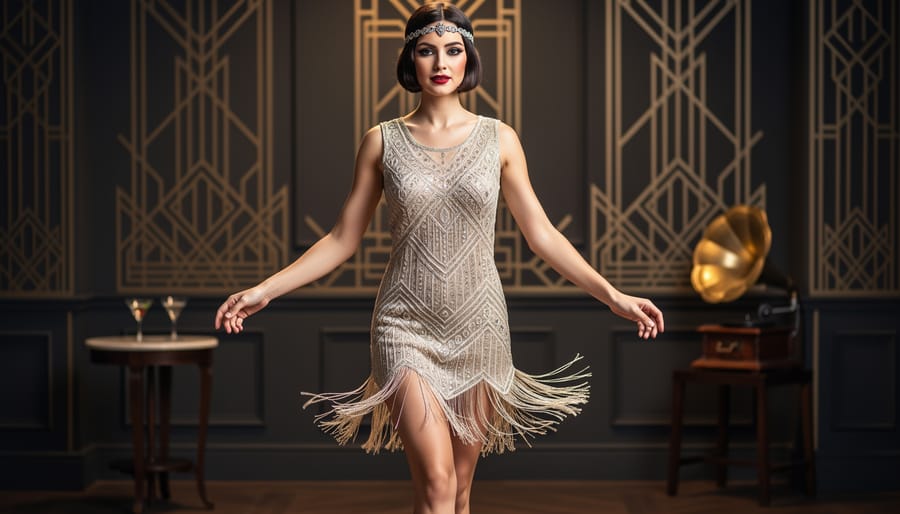
Icons Who Wore Their Independence: Josephine Baker and Louise Brooks
The 1920s gave us extraordinary women who turned fashion into personal revolution, and few did it more brilliantly than Josephine Baker and Louise Brooks. These icons didn’t just wear the flapper style—they reimagined it entirely, proving that true elegance comes from wearing your independence on your sleeve.
Josephine Baker transformed fashion into an act of liberation. Her daring stage costumes and effortless daywear choices challenged conventional beauty standards of the era. She embraced her body with unapologetic confidence, wearing bias-cut gowns that celebrated her figure rather than concealing it. Baker showed the world that glamour transcended narrow definitions, and her influence helped expand what it meant to be fashionable and feminine.
Louise Brooks brought her own rebellion to the fashion world with that iconic sleek bob and minimalist aesthetic. She stripped away the fussiness that had defined earlier women’s fashion, favoring clean lines and simple silhouettes that emphasized movement and freedom. Brooks proved that you could be utterly sophisticated without conforming to restrictive beauty ideals.
Both women understood something revolutionary: fashion works best when it serves your spirit, not the other way around. They wore what made them feel powerful, beautiful, and free. Their legacy reminds us that the most timeless style comes from honoring your authentic self, celebrating your unique body, and dressing for nobody’s approval but your own.
Glamour Meets Practicality: The Transformative 1930s-1940s
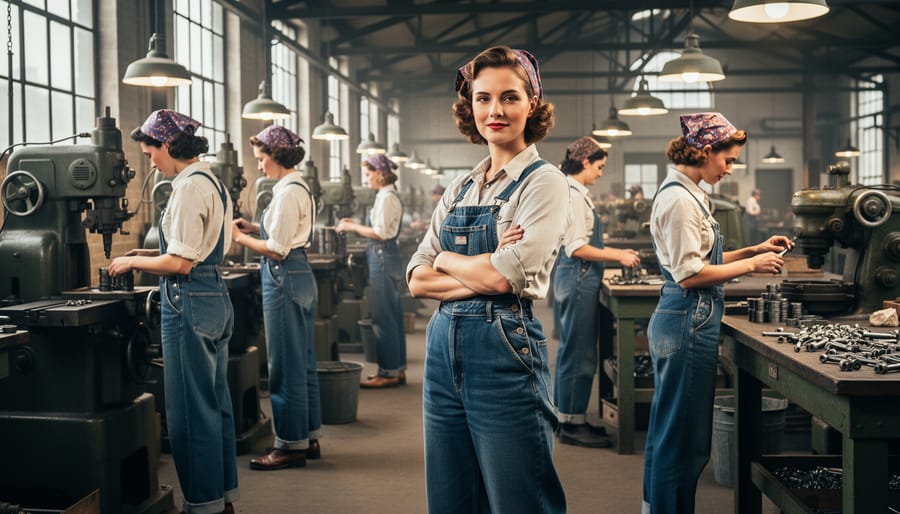
Rosie the Riveter: When Workwear Became Revolutionary
The 1940s brought an unexpected revolution to women’s closets when millions of women rolled up their sleeves and stepped into factories, shipyards, and workshops. With men serving overseas, women became the backbone of wartime production, and fashion had to catch up with this seismic shift. Enter practical workwear that celebrated strength without sacrificing femininity.
Rosie the Riveter became more than a propaganda poster—she embodied a new kind of beauty that honored capable hands and strong shoulders. Women discovered that trousers weren’t just acceptable; they were empowering. Denim dungarees, sturdy canvas pants, and coveralls became wardrobe staples, paired with bandanas that kept hair safe around machinery while adding a pop of personality. These weren’t compromises—they were declarations of capability.
What makes this era particularly special is how women refused to choose between strength and style. They painted their legs to mimic stockings when nylon was rationed, turned parachute silk into gorgeous blouses, and made bold red lipstick their signature of resilience. Every body type was valued for what it could accomplish, creating an atmosphere of collective pride rather than competition.
This period proved that fashion could serve women’s lives rather than restrict them. The legacy of 1940s workwear continues inspiring vintage enthusiasts today—reminding us that true style celebrates who we are and what we can do. Those practical pieces opened doors that would never fully close again, forever changing how women dress and how society views feminine strength.
The Pinup Revolution: Celebrating Every Curve (1940s-1950s)
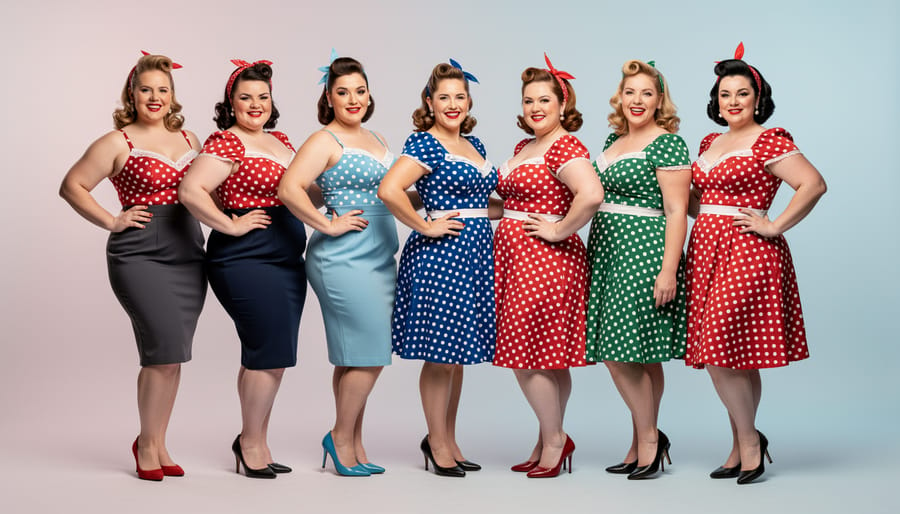
Bettie Page and the Power of Owning Your Sensuality
When Bettie Page stepped in front of the camera in the 1950s, she did something revolutionary: she smiled. While other models posed with distant, untouchable expressions, Bettie looked directly at the viewer with genuine joy and confidence. She wasn’t just modeling clothes or poses—she was celebrating her own body and inviting others to do the same.
Bettie and her fellow pinup icons created a space where sensuality belonged to women themselves, not to the male gaze alone. The pinup style they popularized wasn’t about conforming to impossible standards. Instead, it embraced curves, celebrated personality, and made room for playfulness and power in equal measure. These women proved that owning your sensuality could be an act of self-determination.
What made Bettie particularly special was her accessibility. She represented everyday beauty—the girl next door with confidence and charisma. Her legacy taught generations that you didn’t need to fit a narrow mold to be captivating. You just needed to be authentically yourself.
Today, vintage fashion enthusiasts continue to draw inspiration from these pinup pioneers, finding freedom in styles that celebrate rather than hide their bodies. The message remains timeless: true style comes from self-assurance, and there’s nothing more attractive than a woman who feels comfortable in her own skin. Bettie didn’t just model fashion—she modeled self-love.
The Hourglass Era: When Fashion Embraced Feminine Silhouettes (1950s)
The 1950s brought us one of fashion’s most recognizable silhouettes: the nipped waist and full, swirling skirt that seemed to dance with every step. After years of wartime rationing and utilitarian clothing, fashion designers like Christian Dior introduced what he called the “New Look” – a celebration of fabric, femininity, and unabashed glamour that women embraced with enthusiasm.
This hourglass era gave us fitted bodices, petticoats that added volume and movement, and waist-cinching belts that created those enviable curves. Icons like Marilyn Monroe, Grace Kelly, and Audrey Hepburn showed the world that feminine style came in beautifully diverse forms. From Monroe’s figure-hugging wiggle dresses to Hepburn’s elegant full skirts, the decade proved there wasn’t just one way to embody glamour.
Of course, the cultural context was complicated. While these styles represented a return to prosperity and femininity, they also emerged during an era when women were encouraged to return to domestic roles after their wartime contributions. The polished, picture-perfect aesthetic reflected both genuine joy in beautiful clothing and societal pressure to conform to specific ideals.
Today’s vintage enthusiasts understand this complexity and reclaim these gorgeous silhouettes on their own terms. Modern lovers of 1950s fashion celebrate how these styles can make you feel confident and beautiful, regardless of whether you’re wearing them to work, social events, or just because they make you smile. The beauty of vintage fashion lies in choosing what empowers you – whether that’s a full circle skirt that twirls perfectly or a fitted pencil dress that makes you feel unstoppable. These timeless pieces remind us that feeling feminine, however you define it, is always a choice worth celebrating.
Breaking the Mold: The Youth Quake and Style Rebellion (1960s-1970s)
From Twiggy to Disco Queens: Expanding Beauty Standards
The late 1960s and 1970s brought a glorious revolution in how we celebrated beauty, moving beyond the restrictive ideals that had dominated previous decades. This era gave us not one, but multiple icons to admire and emulate, each representing a different vision of feminine beauty.
Twiggy burst onto the scene with her gamine frame and doe eyes, challenging the curvaceous Hollywood standard. But here’s what makes this period truly special: her rise didn’t eclipse other body types. Instead, the fashion world expanded to embrace variety. Disco queens like Donna Summer and Diana Ross brought glamorous curves, natural hair textures, and unapologetic confidence to the forefront. These women showed us that beauty could be bold, funky, and authentically diverse.
The androgynous looks popularized by Twiggy existed alongside the voluptuous silhouettes celebrated in disco culture. Halston’s flowing jersey dresses flattered various figures, while wrap dresses democratized style for every body type. Platform shoes and bell-bottoms allowed women of all heights to make a statement.
This wasn’t just about fashion choices; it represented a fundamental shift in consciousness. Women could finally see themselves reflected in popular culture, whether they were petite or statuesque, slim or curvy. The era proved that self-expression shouldn’t come with size restrictions or rigid beauty rules. Every body deserved to shimmer under the disco ball, and fashion finally caught up with that beautiful truth.
Why Vintage Fashion Celebrates You Today
When you slip into a 1950s circle skirt or fasten a 1920s beaded gown, you’re doing something beautifully radical. You’re rejecting the endless cycle of fast fashion that tells us we need to buy new, identical pieces every season. Instead, you’re celebrating the women who came before us—the flappers who dared to bare their knees, the wartime heroines who redefined femininity in trousers, the New Look devotees who reclaimed their curves after years of rationing.
Vintage fashion is the ultimate act of self-expression. Unlike cookie-cutter mall clothing designed for a single body type, vintage pieces come from eras that celebrated diverse silhouettes. Whether you’re drawn to the romantic hourglass shapes of the 1940s, the mod mini dresses of the 1960s, or the flowing bohemian styles of the 1970s, there’s a decade that speaks to your unique body and spirit. These garments were crafted when clothing was made to last, when construction quality mattered, and when fashion genuinely offered variety rather than conformity.
Every time you choose vintage, you’re honoring the rebellious spirit of women throughout history who used fashion as their voice. You’re connecting with the suffragettes who shocked society, the pin-up queens who redefined beauty standards, and the disco divas who danced to their own rhythm. Styling vintage pieces isn’t about costume-wearing or living in the past—it’s about bringing the best of fashion history into your present, creating a look that’s authentically yours.
In a world of mass production and social media sameness, wearing vintage is your declaration of independence. You’re not following trends; you’re making them. You’re not hiding your body; you’re celebrating it in garments that were designed to flatter real women with real curves. You’re part of a community that values individuality, sustainability, and the timeless elegance of eras past. That’s something truly worth celebrating.
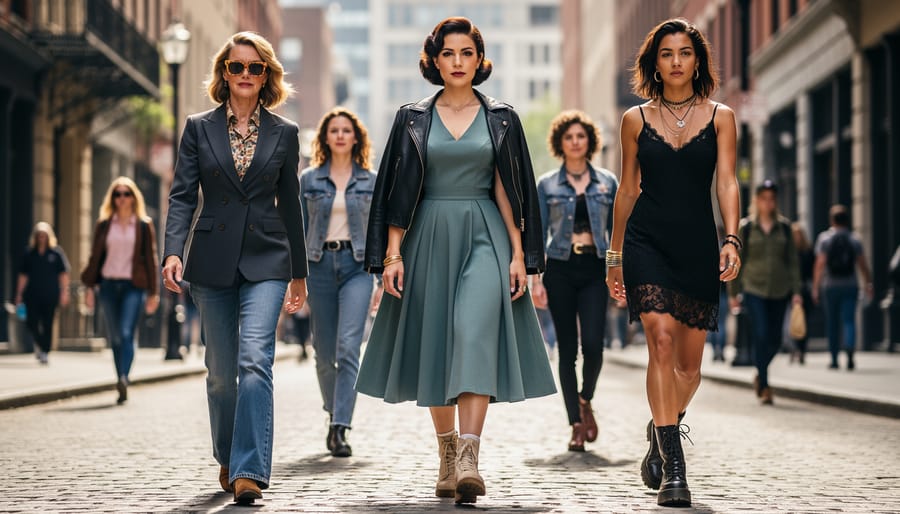
Understanding how women’s fashion has evolved through the decades isn’t just about appreciating beautiful garments—it’s about recognizing the courage, creativity, and rebellion woven into every seam. From the liberation of the flapper’s dropped waistline to the confident curves celebrated in 1950s silhouettes, each era tells a story of women claiming their right to express themselves authentically. When you slip into a vintage-inspired piece today, you’re not just wearing clothing; you’re carrying forward that legacy of bold self-expression.
The beauty of vintage fashion lies in its timeless celebration of diverse body types and personal style. Unlike fleeting trends that demand conformity, vintage pieces invite you to honor your unique shape and personality. Every gathered waist, sweetheart neckline, and A-line skirt was designed to make real women feel extraordinary—and that power remains just as potent today.
Ready to write your own fashion story? Embrace the rebellious spirit that’s always defined women’s style evolution. Explore vintage boutiques, experiment with different eras, and discover the pieces that make you feel unstoppable. Join our vibrant vintage fashion community where individuality reigns supreme and every body is celebrated. Your unique voice deserves to be heard—let vintage fashion be your megaphone.